Arriving at each new city, the traveller finds again a past of his that he did not know he had: the foreignness of what you no longer are or no longer possess lies in wait for you in foreign, unpossessed places.
― Italo Calvino, Invisible Cities

Welcome to my personal space on the web – a small corner where I share aspects of my intellectual journey.
I grew up in Athens, Greece, during a time of military dictatorship. At first, I was unaware of it, but gradually, I recognized the symbolic and physical violence that this regime, led by a small group of mediocre army officers, was trying to impose. Their vision for Greece was a sanitized, sterile dystopia, imposed on a society still reeling from the wounds of a bitter civil war. During those years, I developed a deep aversion to the militaristic rituals imposed by the regime—uniforms, parades, and other symbols of conformity that still persists.
Our home was filled with books and the soft, unforgettable sounds of a beautiful Erard piano, though I never quite mastered the instrument as my mother had hoped. However, thanks to her persistence, I became fluent in both French and English at a young age. Reflecting on my schooling, it was a mixed experience. On one hand, it involved the dull repetition of clichés about the nation, religion, and patriarchy. On the other, there were rare moments of intellectual brilliance—times when inspired teachers, like my primary school teacher who was also a poet, broke through the conservative curriculum. Some of my teachers dared to defy the rigidity imposed by educational policymakers, like my junior high religious studies teacher, who replaced catechism and liturgy with the works of Fromm, Krishnamurti, and Marcuse. Regrettably, we mistook her passion for eccentricity.
After finishing high school, I planned to study economics, though this choice was less driven by passion and more by the lack of career counseling in the Greek education system. By a stroke of luck, I was admitted to Panteion University, where I studied politics and international studies. The influence of the vibrant pulse of political and cultural change in Greece was unmistakable during my undergraduate years. Guided by passionate, forward-thinking professors, my cohort explored not only politics and international relations but also history, law, and economics. Each subject revealed new perspectives, sparking intense debates and fostering a deep understanding of the forces shaping our world. It was not just an academic journey—it was a reflection of the country finding itself in the midst of a seismic political shift. The atmosphere crackled with the energy of change, as if Greece had turned into a living, breathing laboratory for political scentists and sociologists. Populism surged through the streets, creating a dynamic, unpredictable environment as the country was finding its way, reimagining its role in Europe and the world. It felt like history was unfolding in real-time, with each political move and public reaction a new experiment in governance and identity.
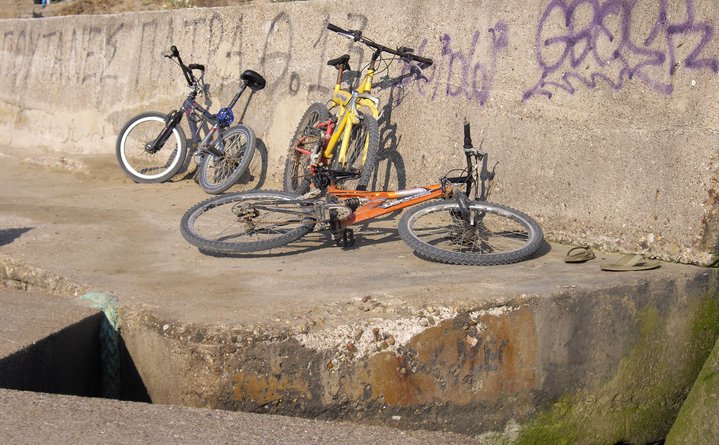
After graduating second in my class in 1985, I pursued a graduate seminar in political sociology at Panteion University, which was the closest thing to post-graduate studies in the field at that time in Greece. Through a NATO-funded fellowship, I then enrolled at the University of Kent in Canterbury, where my research focused on populism as a social movement. At Kent, I felt like a child in a candy store, taking political sociology, social anthropology and politics postgraduate classes and indulging in critical theory of all stripes, as well as psychoanalysis (and this does not mean only Lacan!), and mainstream political and social theory. I participated in the launch of the interdisciplinary programme of Communication and Image Studies and became involved with the Critical Lawyers’ Group. At Kent, I began teaching sociology and developed an interest in nationalism, post-communist politics, and conflict in the Western Balkans. I also discovered a passion for cooking and cycling, though I wore out three bicycles along the way—one of which I wrecked on a stone fence that found itself in the middle of my route, coming down Tyler Hill. I also found time to protest against various injustices, including the Gulf War and the abysmal food at Rutherford College. I traveled extensively across Europe until I found myself without a passport as I had to suffer the consequences of not doing my military service back in Greece. Being confined to the UK made me appreciate the freedom to travel that most people around me had and turned airports into places of bittersweet reunions and sad goodbyes, but that is another story….
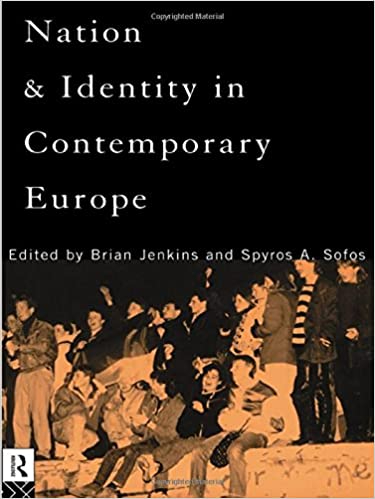
In 1993, I joined the University of Portsmouth as a Research Associate, and eventually a Research Fellow and a Senior Lecturer. There, I worked on a project examining nationalism in Europe, which culminated in the publication of Nation and Identity In Contemporary Europe (1996), co-edited with Brian Jenkins. This interdisciplinary work was hailed as an intriguing exploration of nationalism’s role across Europe. Concurrently, I joined and later directed the Mediterranean Research Group, investigating the region’s complexities and Europe’s Mediterranean policies.
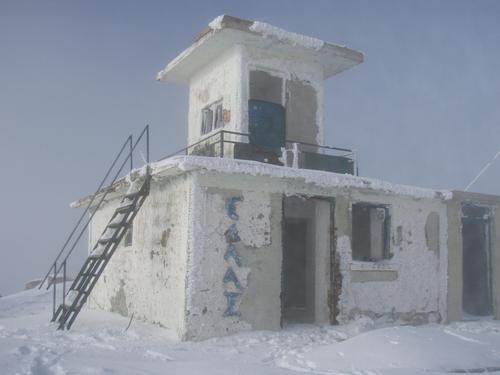
After my father’s sudden death, I took the decision to return to Greece to do my military service, starting at the 547th Infantry Battalion, a training camp in Rethymno, in Northern Crete informally designated as an “AAA” camp, for conscripts classified as illiterate, those who had failed to report for duty in time, and so-called “returnees” (mainly Greeks from the former Soviet Union “returning” to a ‘homeland’ that they barely knew). Later, I was transferred to a snow-buried mechanized infantry battalion in the northernmost part of Greece, where it meets Bulgaria and Turkey. There, the only distraction in the frozen winter nights was music from Edirne’s radio stations just on the other side of the border and the company of the books of Jorge Luis Borges, Italo Calvino and Tom Robbins.
Although one could assume that my interest in Turkey was related to that garrison posting, the fact is that this had its origins in the early eighties when I travelled throughout the country in the aftermath of the brutal coup d’état headed by General Kenan Evren which prompted me to take Turkish studies as part of my first degree. A more personal reason for that “first” encounter with Turkish society and its complexities was my decision to explore the origins of my paternal grandparents – my grandfather was born in the parish of the Virgin Mary of Stavrodromion in Pera (now Beyoğlu) in İstanbul (Constantinople as he called it at the time) and my grandmother and her mother escaped the advance of Turkish irregular troops from the Aegean coast town of Ayvalık, or Ayvali as they called it when reminiscing about their past lives there just before the population exchange of 1924.
Returning to Portsmouth, I resumed my academic career and helped establish the Centre for European Studies Research (CESR), which became a hub of excellence in European and international studies. In 2000, I moved to Kingston University, where I launched and directed the MSc in International Conflict for six years. There, I also worked to bring to Kingston the Vane Ivanovic library with its unique collection of rare books and correspondence related to former Yugoslavia and co-founded the Helen Bamber Centre for the Study of Rights, Conflict, and Mass Violence.
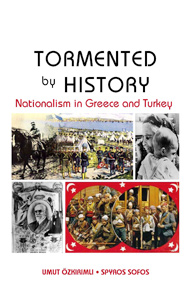
In 2008, I co-authored Tormented by History: Nationalism in Greece and Turkey, the first comparative study tracing the rise of nationalism in both countries over the past 200 years. The book challenged prevailing assumptions and was praised as a remarkable collaboration between intellectuals from two historically rival nations. Translated to Greek in the same year as Το Βάσανο της Ιστορίας: Ο Εθνικισμός στην Ελλάδα και την Τουρκία and to Turkish in 2013 as Tarihin Cenderesinde: Yunanistan ve Türkiye’de Milliyetçilik it was described as a most impressive text, drawing together, and in a very fluent and integrated way, the histories and debates on nationalism in Greece and Turkey. […] and a remarkable example, too rare in this world, of collaboration by intellectuals from two rival states and also, given the sensibilities involved, a most courageous and valiant intervention by the late Fred Halliday. Tormented by History represents for me a journey of discovery; an attempt to peer underneath the narratives that Greek and Turkish nationalisms share and which have divided people, territories, and memories and to piece together fragments of repressed narratives and memories that have been contesting the divisive languages of nationalism, affirming that the human landscapes that the two societies have traversed are not so different after all.
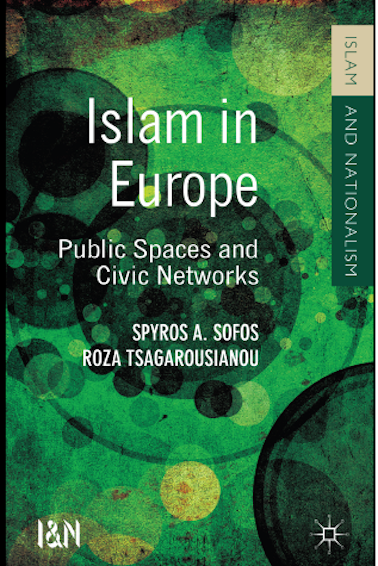
Later, I joined Lund University’s Centre for Middle Eastern Studies, where I worked for a decade as a Lecturer, Research Coordinator and, later on, member of the Centre Steering Group. During this time, I finalized a research project on European Muslim identities that involved fieldwork in five European countries, culminating in a co-authored book—Islam in Europe: Public Spaces and Civic Networks (2013) hailed as “a valuable pointer to future lines of research … taking the reader beyond analysis of society and politics, … focusing on the complex and tense field of the conceptual” (Jørgen S. Nielsen). My academic pursuits also extended into authoritarianism, social movements, and the political sociology of ISIS, while a project of mine on polarization and democracy received international funding. I also lectured at the Human Rights Summer School of the Swedish Research Institute in Istanbul.
In 2020, I completed my PhD in Politics at the University of Copenhagen. Returning to the UK in 2021, I joined the Middle East Centre at the London School of Economics, where I worked on projects ranging from urban citizenship in the Middle East to Turkey’s foreign policy and British Muslim youth identities (funded by the LSE Kuwait Programme, the Research and Impact Support Fund, and the FCDO as part of the Global Fragmentation of Peacemaking and Peacebuilding PeaceRep). I also taught politics and conflict at the MSc in Culture and Conflict in a Global Europe, and the MSc in Theory and History of International Relations.
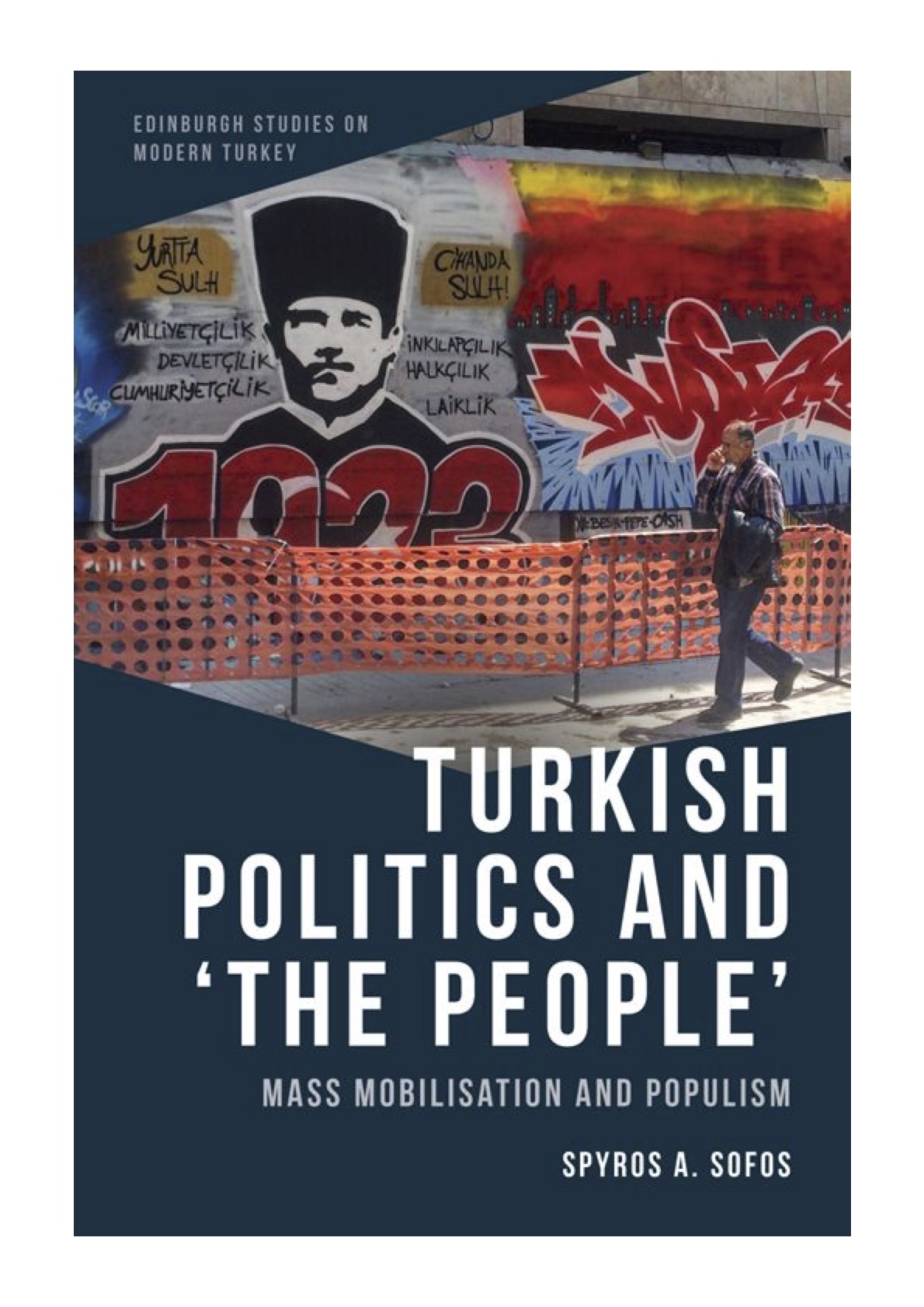
My most recent work, Turkish Politics and ‘The People’: Mass Mobilisation and Populism, was published in 2022, exploring the evolution of populism in Turkey. Turkish Politics and ‘The People’ develops a discursive approach, uses and integrates modes of analysis from a diverse body of scholarship such as sociology, cultural and psychosocial studies, political science and theory into a genealogical narrative and elucidates the transformations of the people in Turkey. My ongoing research on populism in contemporary Turkey—particularly its interplay with international revisionism—shapes my broader thinking on political identity and global order. This work will appear in my forthcoming book, Turkey, Geopolitics and the Age of Populism (Routledge, 2026).
Today, I continue my academic journey at Simon Fraser University in Vancouver, where I teach and research topics ranging from Southeastern European politics to Islam and the West. I am also a member of SFU’s Centre for Comparative Muslim Studies and the SFU Stavros Niarchos Foundation Centre for Hellenic Studies, on whose Steering Committees I serve. In addition, I am a member of the Woodsworth Advisory Committee, contributing to the work of the SFU Institute for the Humanities, and of the Jack and Doris Shadbolt Fellowship in the Humanities Steering Committee—a fellowship scheme intended to foster acts of world-making in the creative arts and publicly engaged scholarship in the humanities, in alignment with the values of advancing reconciliation, and promoting equity, diversity, inclusion, communication, coordination, and collaboration.

Living and working on the unceded, and in many ways stolen, territories of the xʷməθkʷəy̓əm (Musqueam), Sḵwx̱wú7mesh Úxwumixw (Squamish), səl̓ilw̓ətaʔɬ (Tsleil-Waututh), and other First Nations has deeply shaped my thinking and practice. Being in this settler-colonial context compels a daily reckoning with the enduring legacies of displacement, silencing, and structural injustice. These realities not only challenge the way I think about the role of academic work in Canada, but have also prompted me to revisit and reframe my research on conflict and nationalism in other geographies—particularly in Europe and the Middle East. The lived experience of Indigenous dispossession here sharpens my sensitivity to the workings of power, belonging, and historical erasure elsewhere. It reminds me that scholarly engagement must resist the temptation to “speak for” others, and instead centre humility, attentiveness, and a commitment to amplifying marginalized voices. In this way, my work continues to be informed by—and accountable to—the histories and struggles that shape both the land I live on and the places I study.
My research and teaching navigate the intricate landscapes of conflict and polarisation, delving into populism threading through the varied shades of Islamist and contemporary populist movements. I explore the complexities of nationalism, inter-ethnic relations, and ethnic conflict with a particular lens on Southeastern Europe, yet always through a comparative frame. I am equally drawn to the exploration of Muslim communities within Europe and North America, dissecting their identities and the networks of transnational Muslim politics, all infused with elements of critical theory. My scholarly journey transcends borders, stretching from Southeastern Europe across the Eastern Mediterranean, extending into Turkey, Greece, Cyprus, Iran, and the broader MENA area.
My professional contributions extend to serving on the advisory board of Transconflict, an NGO dedicated to conflict transformation. I have also held the role of chair at the Association for the Study of South Europe and the Balkans. My editorial experience includes positions on the boards of the Journal of Area Studies, Mediterranean Politics, the Journal of Southern Europe and the Balkans, and tenure as editor for the Journal of Contemporary European Studies, a journal that, in 1999, I transformed from an in-house publication based at the University of Portsmouth and Loughborough University into a major interdisciplinary European Studies academic resource.
From 2012 to 2018, I worked to enrich the academic discourse on identity politics as the co-editor of the Islam and Nationalism book series with Palgrave Macmillan. More recently, I spearheaded the #RethinkingPopulism initiative in partnership with openDemocracy, guiding it as the lead editor since its inception in 2019.
© 2023-2025 Spyros A. Sofos
 spyros a sofos
You must be logged in to post a comment.